Hyperbaric Oxygen Therapy
Absorb oxygen deeper into your body to heal faster
Hyperbaric Oxygen Therapy
Absorb oxygen deeper into your body to heal faster
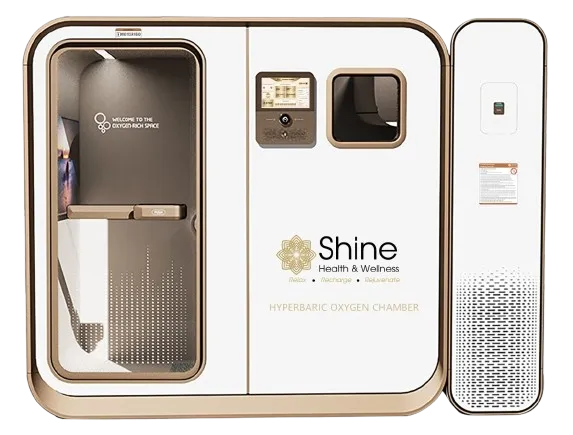
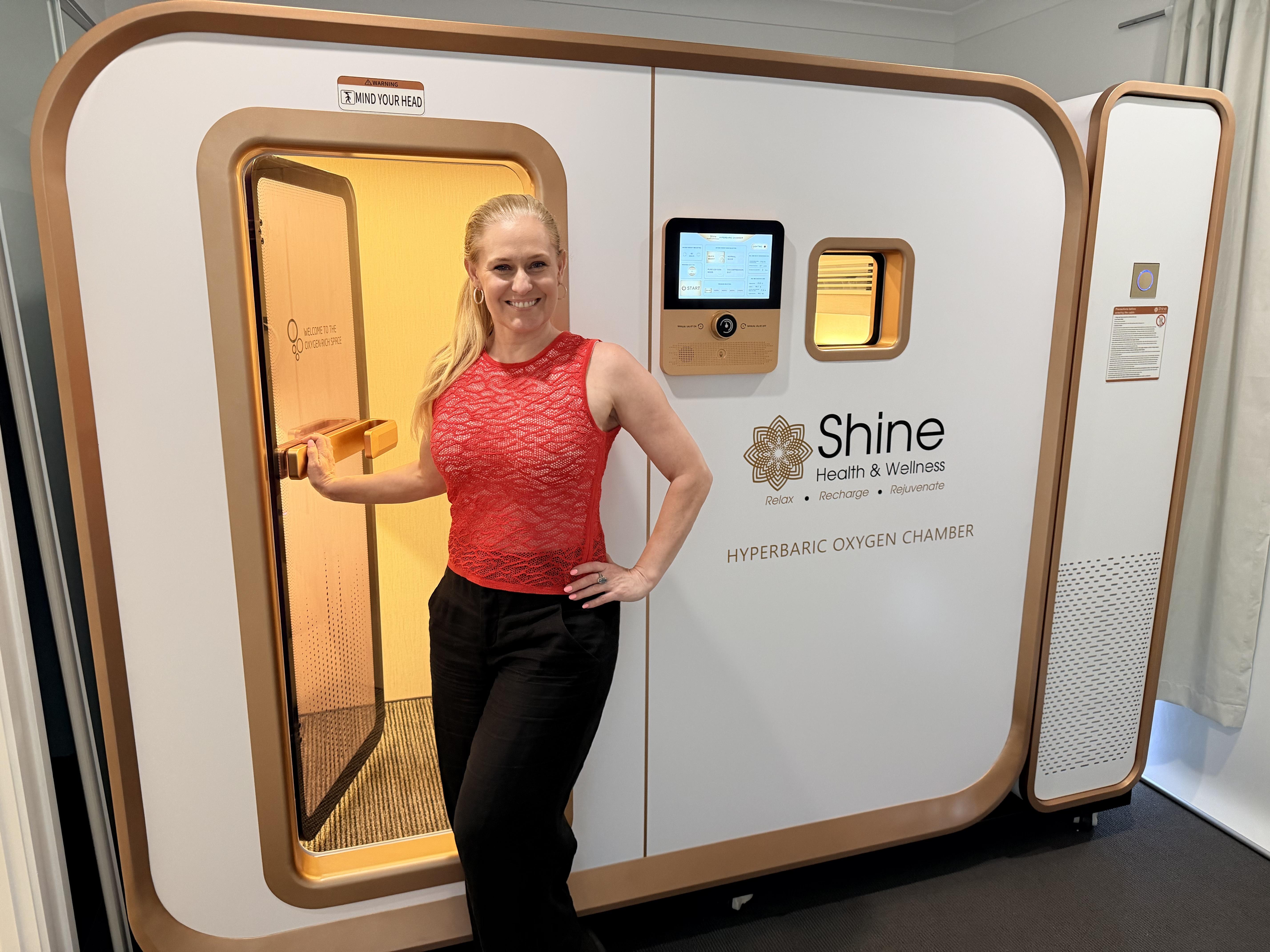
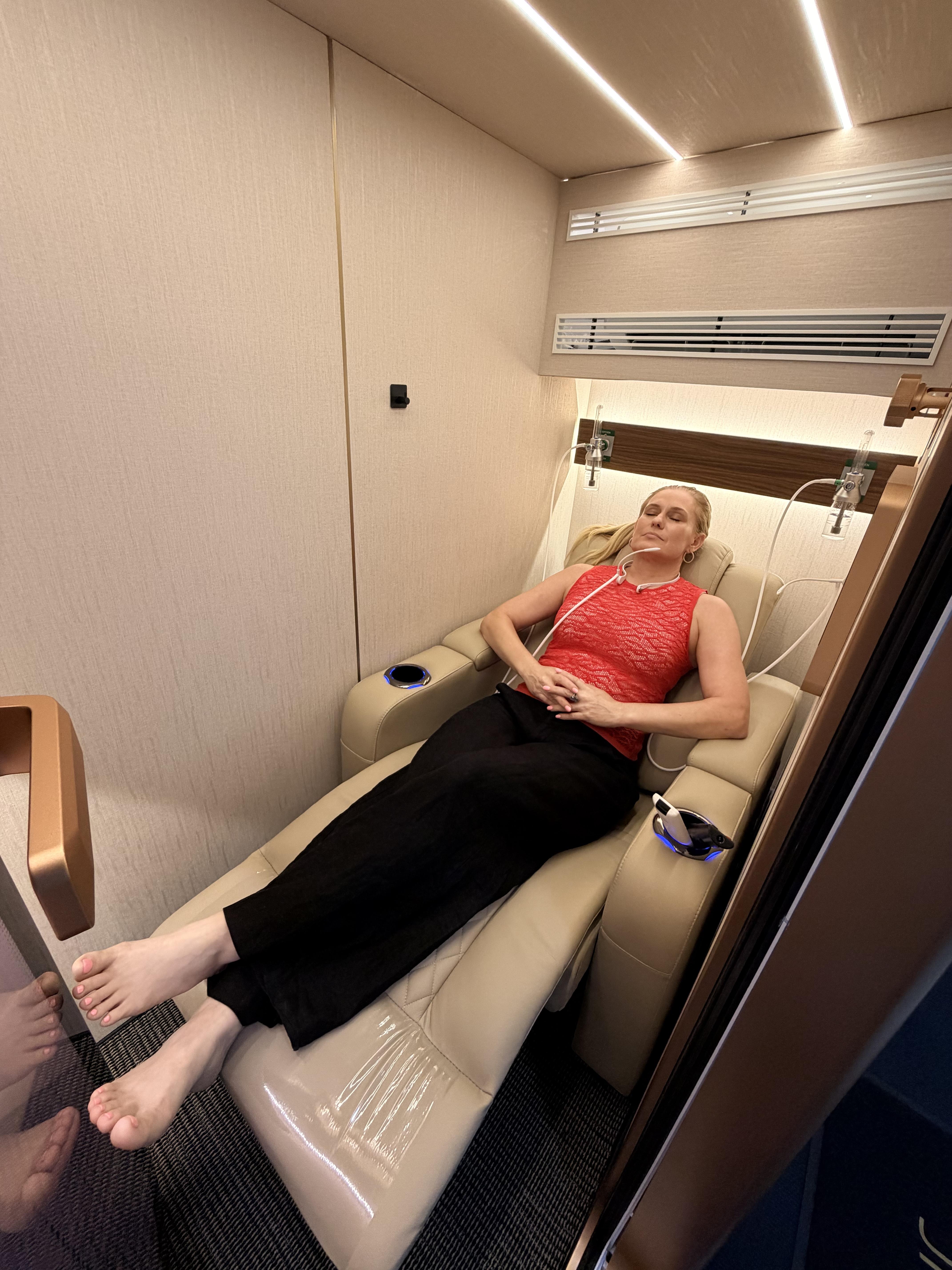
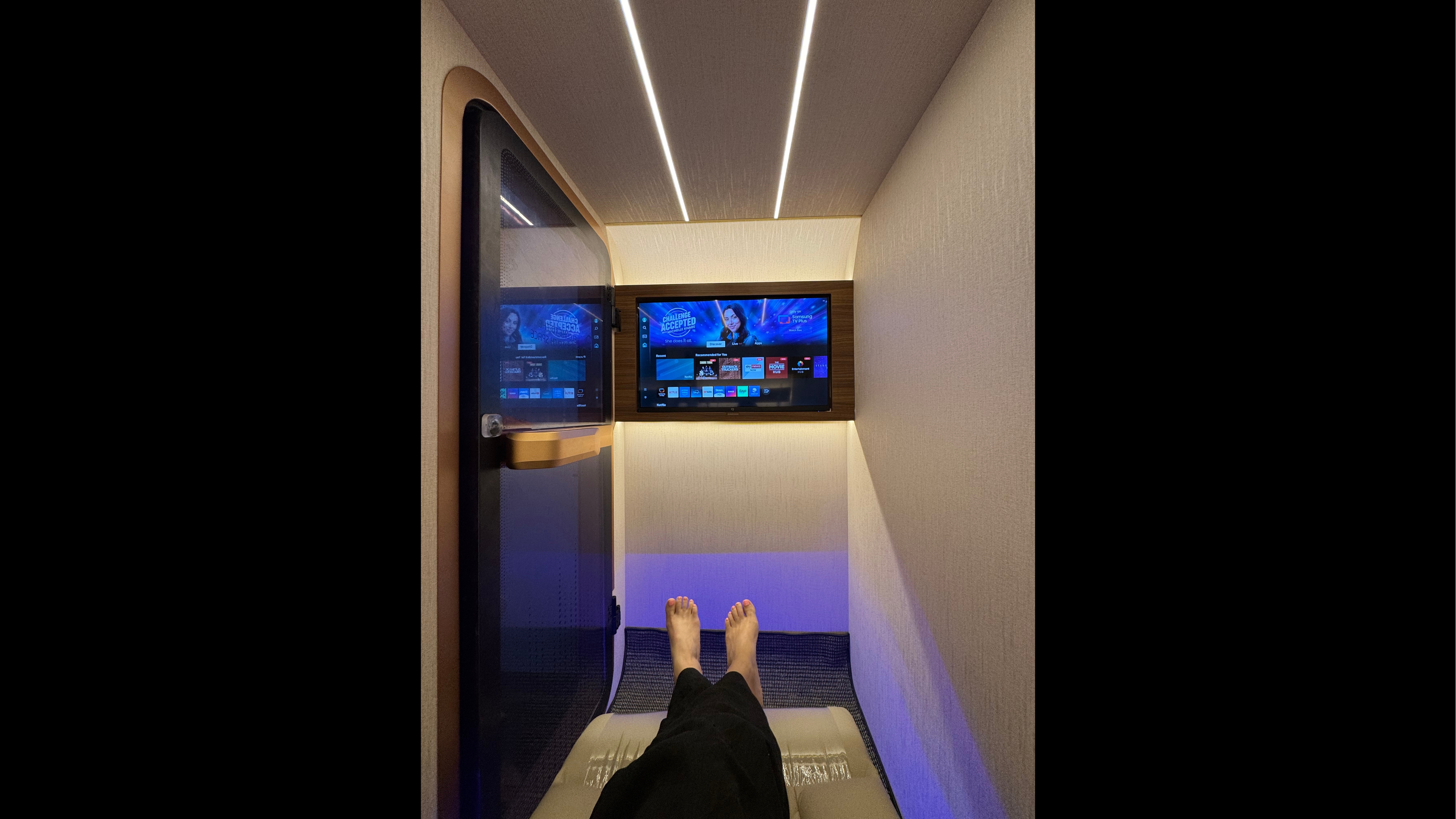
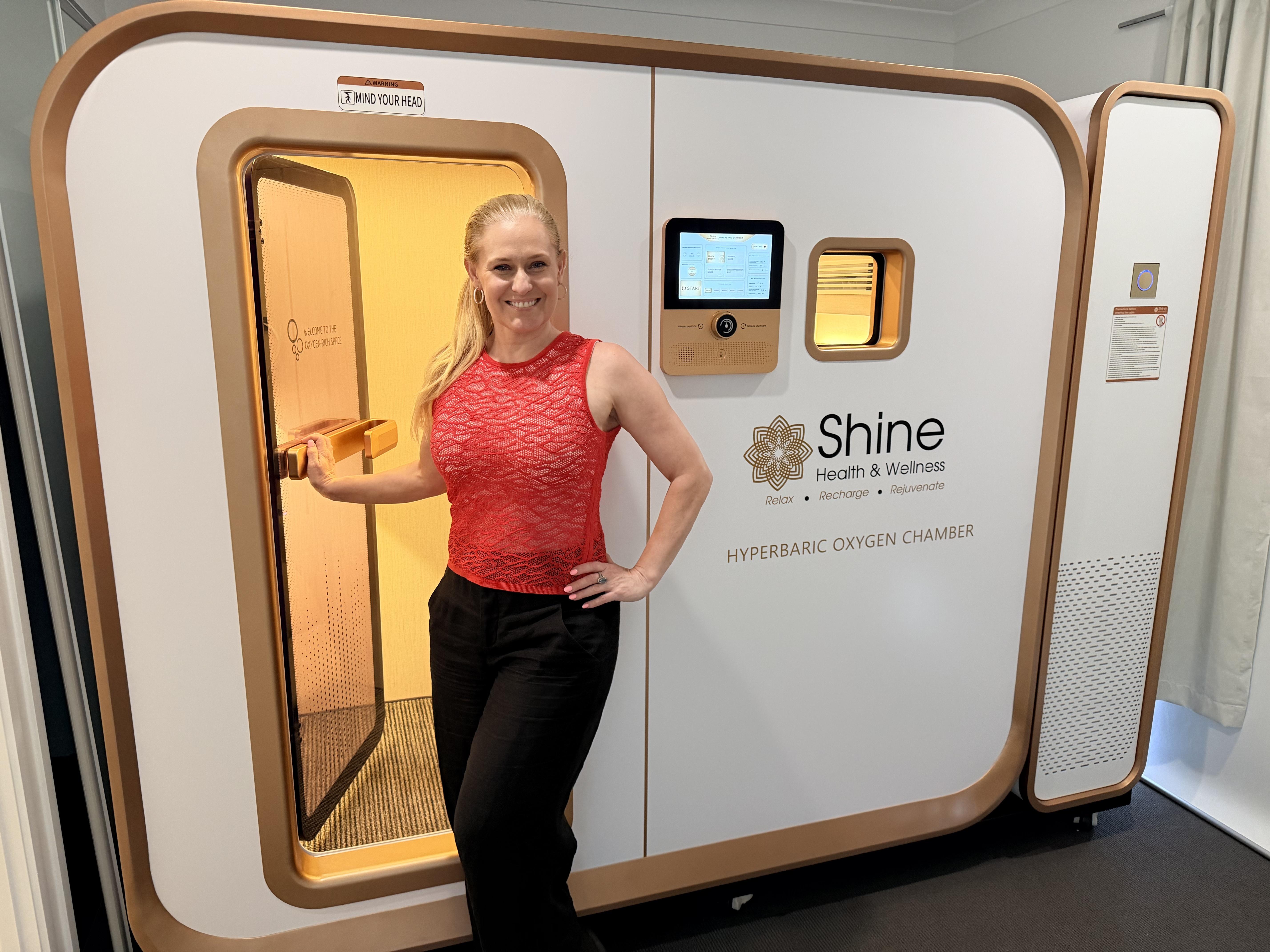
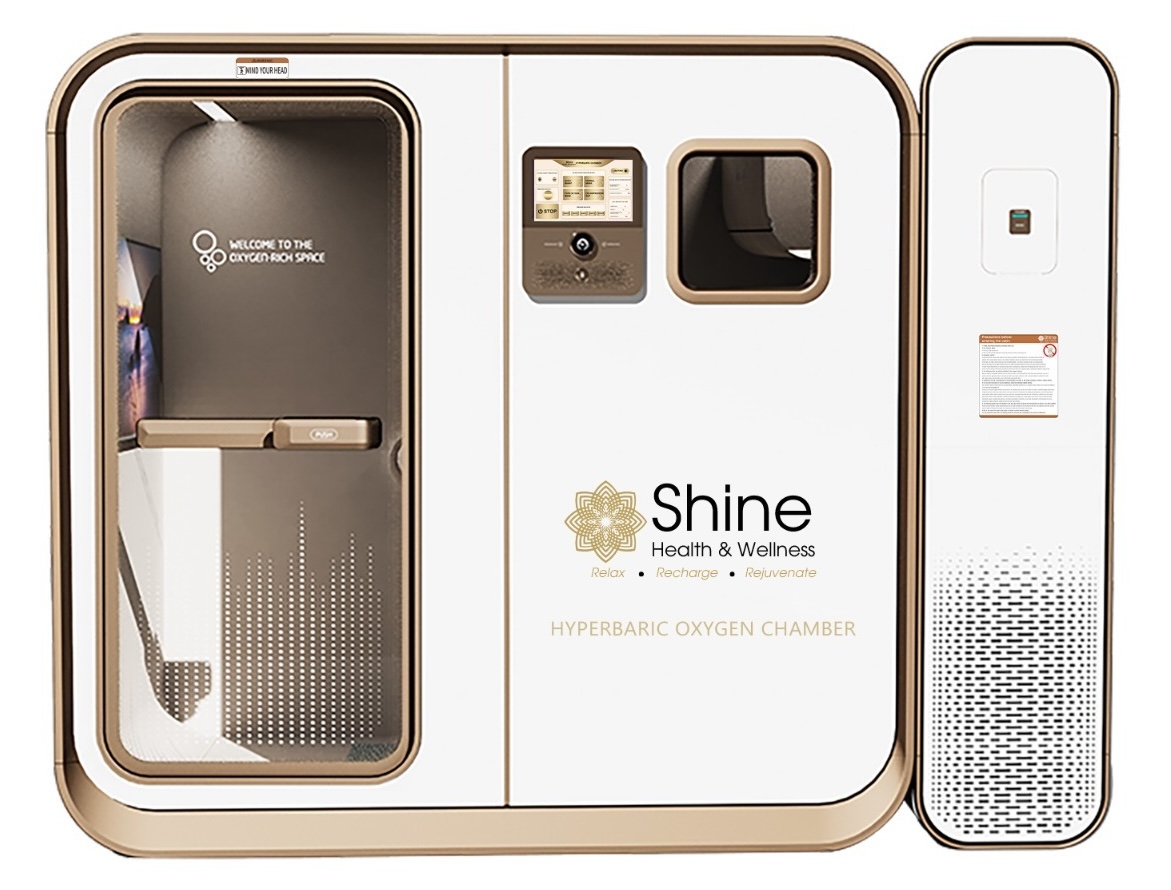
Experience First-Class Luxury HyperBaric Oxygen Therapy in our walk-in 2.0ATA chamber, complete with mask-free oxygen breather, leather recliner, TV, and adjustable lighting.
At Shine Health & Wellness, we are proud to offer Australia’s first fully walk-in hyperbaric oxygen chamber operating at therapeutic pressures up to 2.0 atmospheres. Designed with comfort, accessibility, and safety at its core, this spacious stand-up chamber removes the fear and physical limitations of traditional hyperbaric therapy.
Clients simply walk in, relax on a reclining leather sofa, watch Netflix or their favourite shows, and breathe oxygen through a comfortable oxygen breather — not a restrictive mask.
The open, climate-controlled environment eliminates the heat, tight spaces, and claustrophobia common in conventional chambers, while industrial-grade air conditioning ensures stable temperature, controlled carbon dioxide levels, and oxygen maintained at safe ambient concentrations.
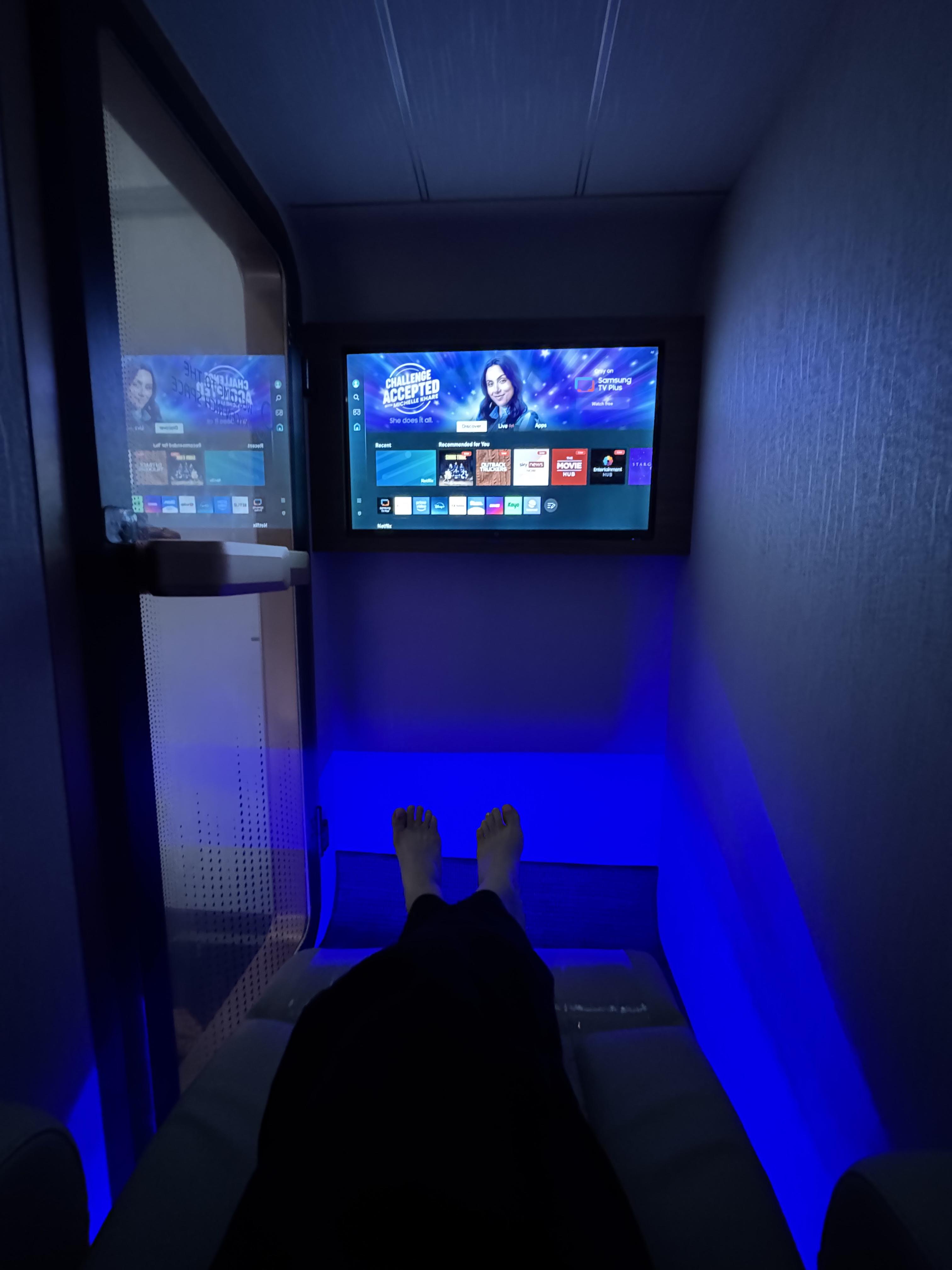
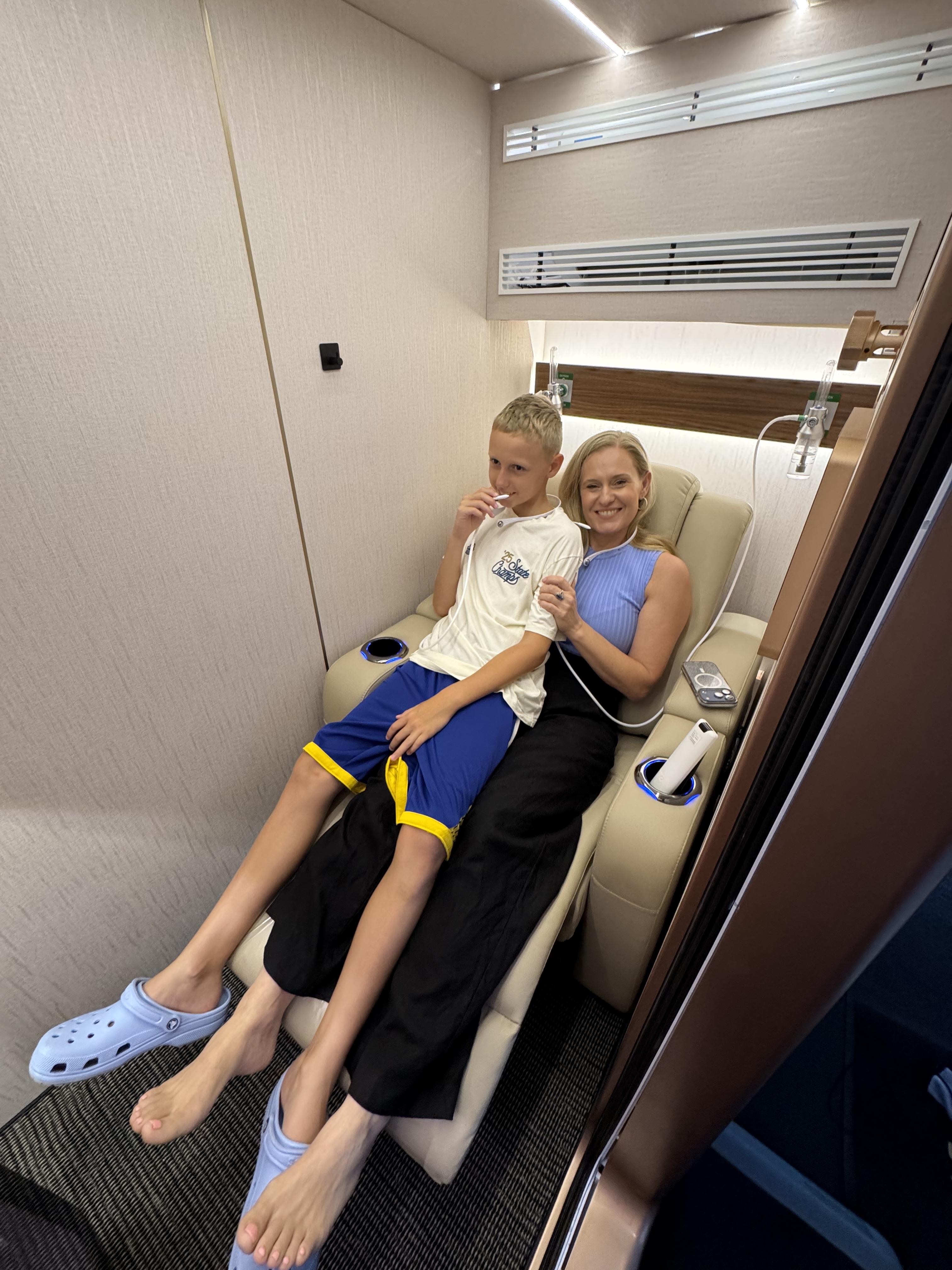
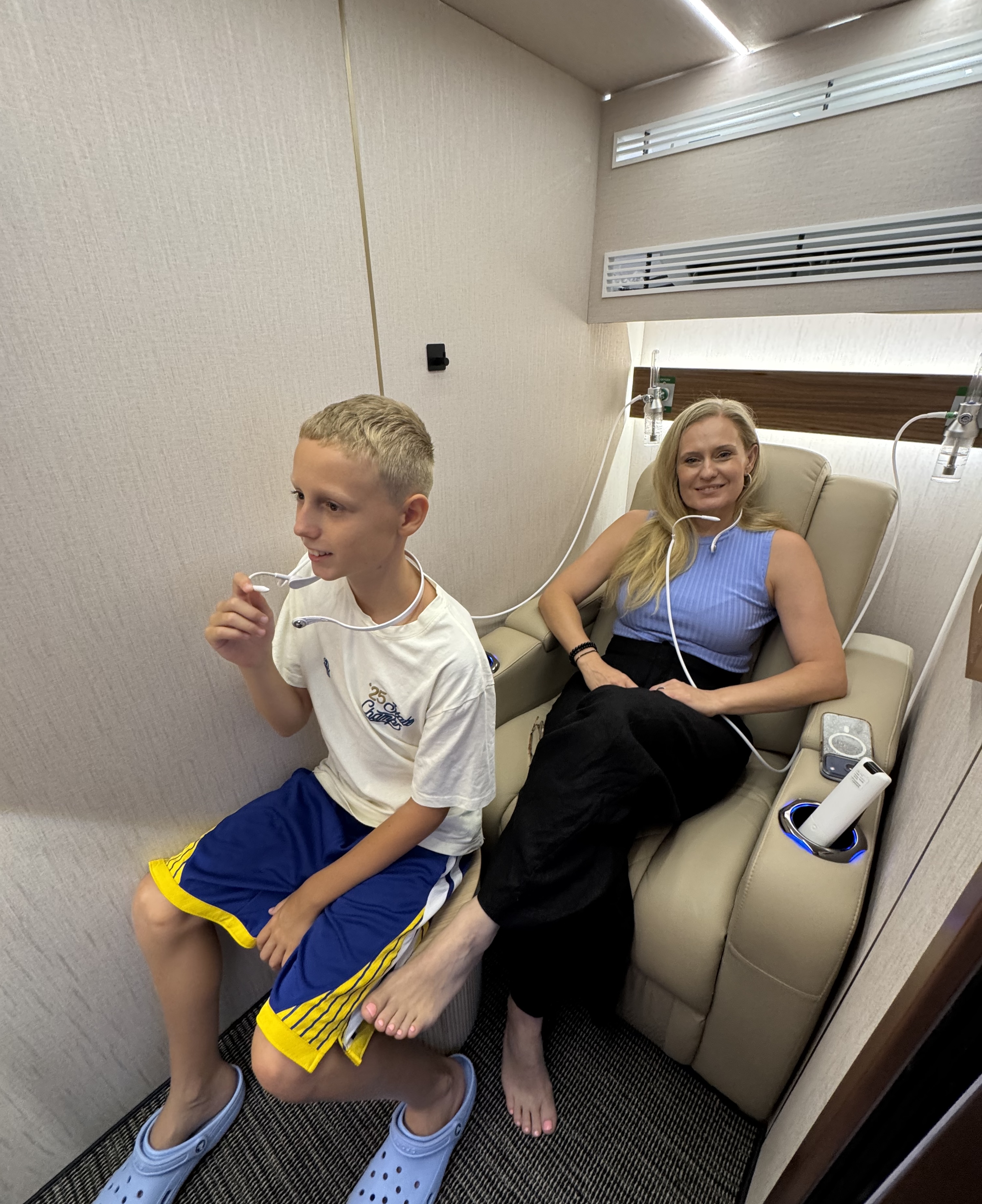
This design is life changing for people with mobility challenges, those who struggle with claustrophobia, and especially for children. Parents can sit inside the chamber with their child, offering comfort, reassurance, and connection throughout the session — transforming what is often a frightening experience into one that feels safe, calm, and even enjoyable.
Our advanced pressure control system allows for an exceptionally gentle and precise increase in pressure, enabling many clients who previously struggled beyond 1.5 atmospheres to comfortably reach 1.8, 1.9, and even the full 2.0 ATA — often with no ear discomfort at all.
This unique combination of accessibility, comfort, and precision makes high-pressure hyperbaric therapy safer, more achievable, and more effective than ever before.
We also have our Economy Class HBOT where you lie down in the chamber with an oxygen mask
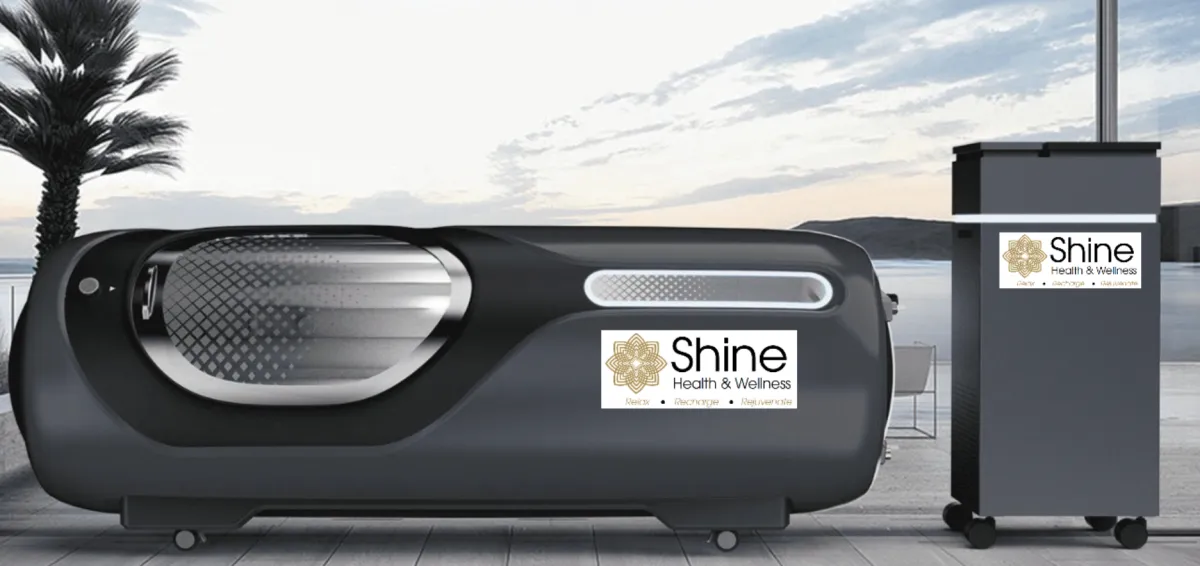
What is Hyperbaric Oxygen Therapy?
Hyperbaric Oxygen Therapy (HBOT) involves breathing almost pure oxygen while inside a special pressurized chamber. The extra pressure allows your blood to carry much more oxygen than normal. This oxygen reaches deep into your tissues, cells, organs, and even bones. The result is faster healing, healthier skin, and improved overall wellness.
A safe, non-invasive therapy
You breathe 96% pure oxygen inside a pressurized chamber
The pressure helps your body absorb 10 to 14 times more oxygen than normal
This oxygen reaches deep into your tissues, cells, organs, brain and even bones
Resulting in faster healing and improved overall wellness throughout your body
Actually, HBOT is one of the few treatments to completely reverse the Chronic Illness cycle - read more on this below...
Short-Term Benefits of HBOT
HBOT has developed a successful track record of helping patients who have been diagnosed with numerous conditions.
Outside of the FDA-approved uses for HBOT therapy, there are now over 120 internationally recognized indications for which hyperbaric oxygen therapy has been shown to be effective and beneficial according to numerous published medical studies.
Here is a list of some the short-term benefits of Hyperbaric Oxygen Treatment that can be experienced after just a few sessions. This is based on clinical studies and proven scientific data.
Accelerates wound healing and tissue repair
Enhances sleep quality
Reduces inflammation and swelling in affected areas
Increases energy levels and mental clarity
Improves white blood cell function within hours of treatment
Speeds up recovery from physical exertion or injury
"THE PRESENCE OF OXYGEN IS THE ABSENCE OF DISEASE"
GARY BRECKA
HUMAN BIOLOGIST & BIOHACKING EXPERT
"THE PRESENCE OF OXYGEN IS THE ABSENCE OF DISEASE"
GARY BRECKA
HUMAN BIOLOGIST & BIOHACKING EXPERT
Long-term Benefits of HBOT
Hyperbaric oxygen therapy becomes the most effective by stacking multiple sessions back-to-back to build up the oxygen concentration in your blood stream high enough to accelerate the healing process inside your body - ideally 30 to 60 sessions done daily or every other day depending on the condition.
While once or twice weekly sessions provide benefits, regular daily sessions create a compounding effect. Each session cycles oxygen under pressure into your blood plasma, then releases it throughout your body (including your brain, tissues, bones, and cells) as the pressure normalizes.
The more frequently you complete these pressure cycles, the greater the cumulative therapeutic benefits, as supported by clinical studies.
Enhances collagen production, strengthening tissues
Supports neuroplasticity, contributing to brain health and cognitive function
Provides anti-aging effects at the cellular level
Improves overall resilience of the immune system
Stimulates the production and mobilization of stem cells, aiding in tissue regeneration
Promotes the formation of new blood vessels (angiogenesis) for improved circulation
How it Works
THE SCIENCE BEHIND HBOT
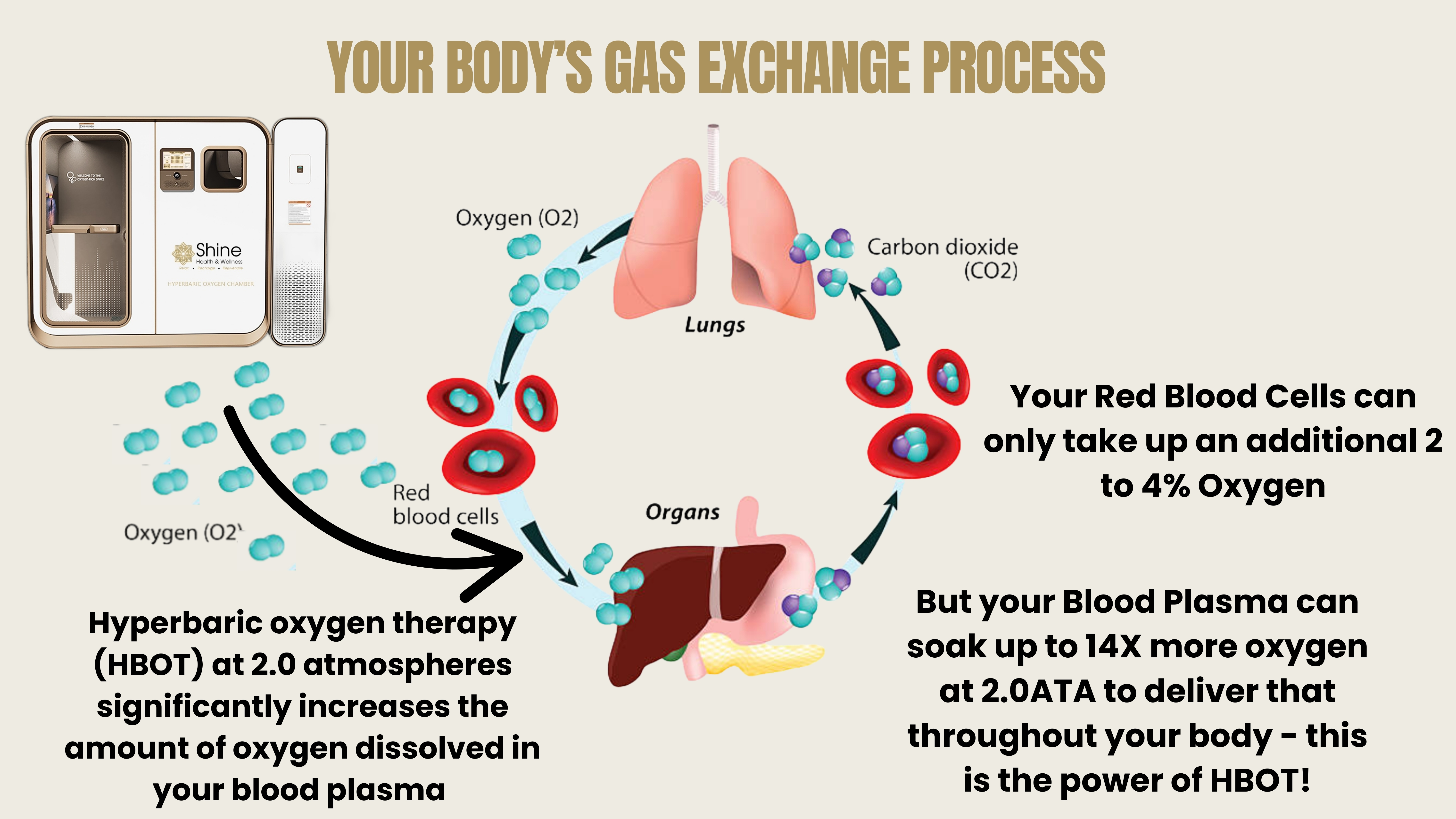
HBOT creates a strong oxygen gradient, allowing more oxygen to move from the lungs into the bloodstream and tissues
Under increased pressure, oxygen dissolves directly into the blood plasma, not just red blood cells
This process enables oxygen to reach areas with limited blood flow or damaged tissues
Plasma oxygen concentration can increase by 10–14 times compared to normal levels depending on the pressure
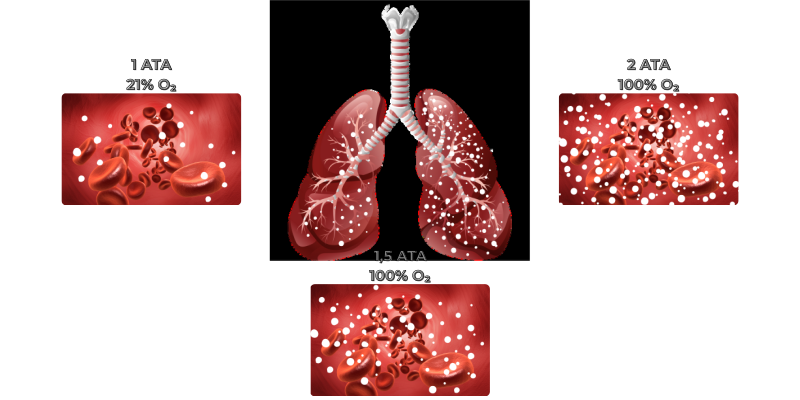
The result? Faster healing, Mental Clarity, Improves Physical Performance, and an overall boost in physical and mental wellness.
How it Works
THE SCIENCE BEHIND HBOT
HBOT creates a strong oxygen gradient, allowing more oxygen to move from the lungs into the bloodstream and tissues
Under increased pressure, oxygen dissolves directly into the blood plasma, not just red blood cells
This process enables oxygen to reach areas with limited blood flow or damaged tissues
Plasma oxygen concentration can increase by 10–14 times compared to normal levels depending on the pressure
The result? Faster healing, Mental Clarity, Improves Physical Performance, and an overall boost in physical and mental wellness.
What Conditions can Benefit from HBOT?
Chronic Fatigue - boosts cellular energy and reduces exhaustion
Cognitive Support - dementia, alzheimer’s, memory, and focus enhancement
Stroke Recovery & Brain Injuries - improves oxygen flow to damaged brain tissue
Cancer Support - supports immune system and cellular repair alongside treatment
Anti-Aging & Skin Health - promotes collagen production & skin rejuvenation
Autism Spectrum Support - may improve focus, behavior & social interaction
Sports Performance & Recovery - faster healing from injuries, reduced inflammation, improved endurance
Immune System Boost - strengthens the body’s defenses against illness
Alzheimers, Dementia & Post Stroke - Supports neuroplasticity, contributing to brain health and cognitive functioN
Lyme Disease & Autoimmune - Enhances the activity of natural killer cells, which target infected or abnormal cells.
IBD, Ulcerative colitis - Reducing inflammation and Boosts antimicrobial activity, helping the body fight bacteria and fungi.
Rheumatoid Arthritus - Reduces inflammation, increases stem cell production for regeneration
How HBOT Supercharges the Immune System
Increases the mobility and effectiveness of white blood cells
Boosts antimicrobial activity, helping the body fight bacteria and fungi
Stimulates the production of cells that combat infections
Neutralizes toxins produced by harmful bacteria
Enhances the activity of natural killer cells, which target infected or abnormal cells
Reduces oxidative stress when administered appropriately

What Conditions can Benefit from HBOT?
Chronic Fatigue - boosts cellular energy and reduces exhaustion
Cognitive Support - dementia, alzheimer’s, memory, and focus enhancement
Stroke Recovery & Brain Injuries - improves oxygen flow to damaged brain tissue
Cancer Support - supports immune system and cellular repair alongside treatment
Anti-Aging & Skin Health - promotes collagen production & skin rejuvenation
Autism Spectrum Support - may improve focus, behavior & social interaction
Sports Performance & Recovery - faster healing from injuries, reduced inflammation, improved endurance
Immune System Boost - strengthens the body’s defenses against illness
Alzheimers, Dementia & Post Stroke - Supports neuroplasticity, contributing to brain health and cognitive functioN
Lyme Disease & Autoimmune - Enhances the activity of natural killer cells, which target infected or abnormal cells.
IBD, Ulcerative colitis - Reducing inflammation and Boosts antimicrobial activity, helping the body fight bacteria and fungi.
Rheumatoid Arthritus - Reduces inflammation, increases stem cell production for regeneration
How HBOT Supercharges the Immune System
Increases the mobility and effectiveness of white blood cells
Boosts antimicrobial activity, helping the body fight bacteria and fungi
Stimulates the production of cells that combat infections
Neutralizes toxins produced by harmful bacteria
Enhances the activity of natural killer cells, which target infected or abnormal cells
Reduces oxidative stress when administered appropriately
Breaking the Chronic Illness Cycle with HBOT
HBOT targets the underlying causes of chronic illness progression
Improves blood flow and oxygen delivery to tissues, supporting healing
Reduces inflammation and oxidative stress, which are common in chronic diseases
Supports mitochondrial function, increasing cellular energy production
Enhances immune system regulation and helps balance the microbiome
Promotes DNA repair and supports epigenetic healing processes
Interrupts the cycle that leads to ongoing tissue damage and breakdown
Breaking the Chronic Illness Cycle with HBOT
HBOT targets the underlying causes of chronic illness progression
Improves blood flow and oxygen delivery to tissues, supporting healing
Reduces inflammation and oxidative stress, which are common in chronic diseases
Supports mitochondrial function, increasing cellular energy production
Enhances immune system regulation and helps balance the microbiome
Promotes DNA repair and supports epigenetic healing processes
Interrupts the cycle that leads to ongoing tissue damage and breakdown
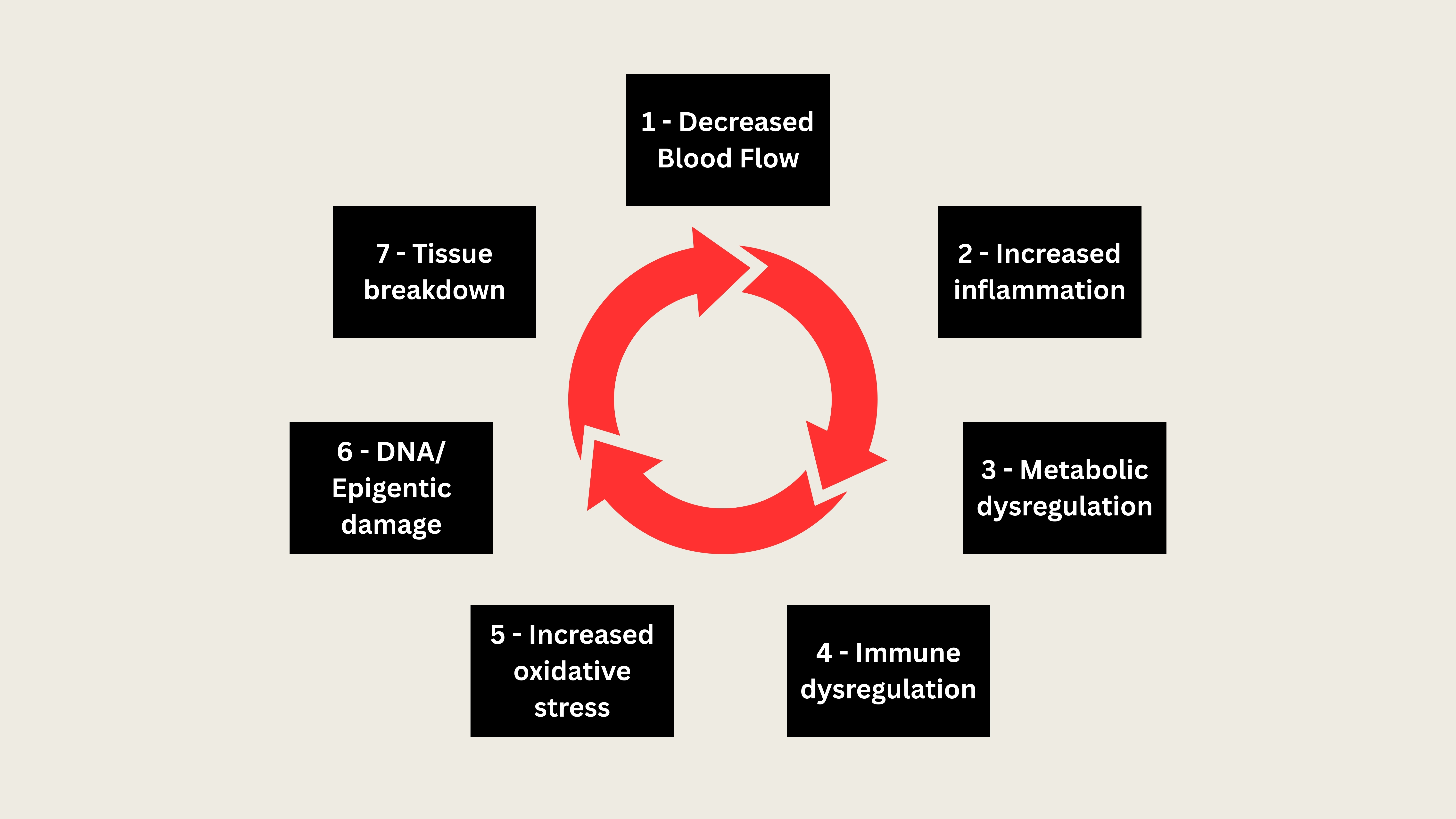
THE CHRONIC ILLNESS PROGRESSION
Chronic illness follows this degeneration cycle
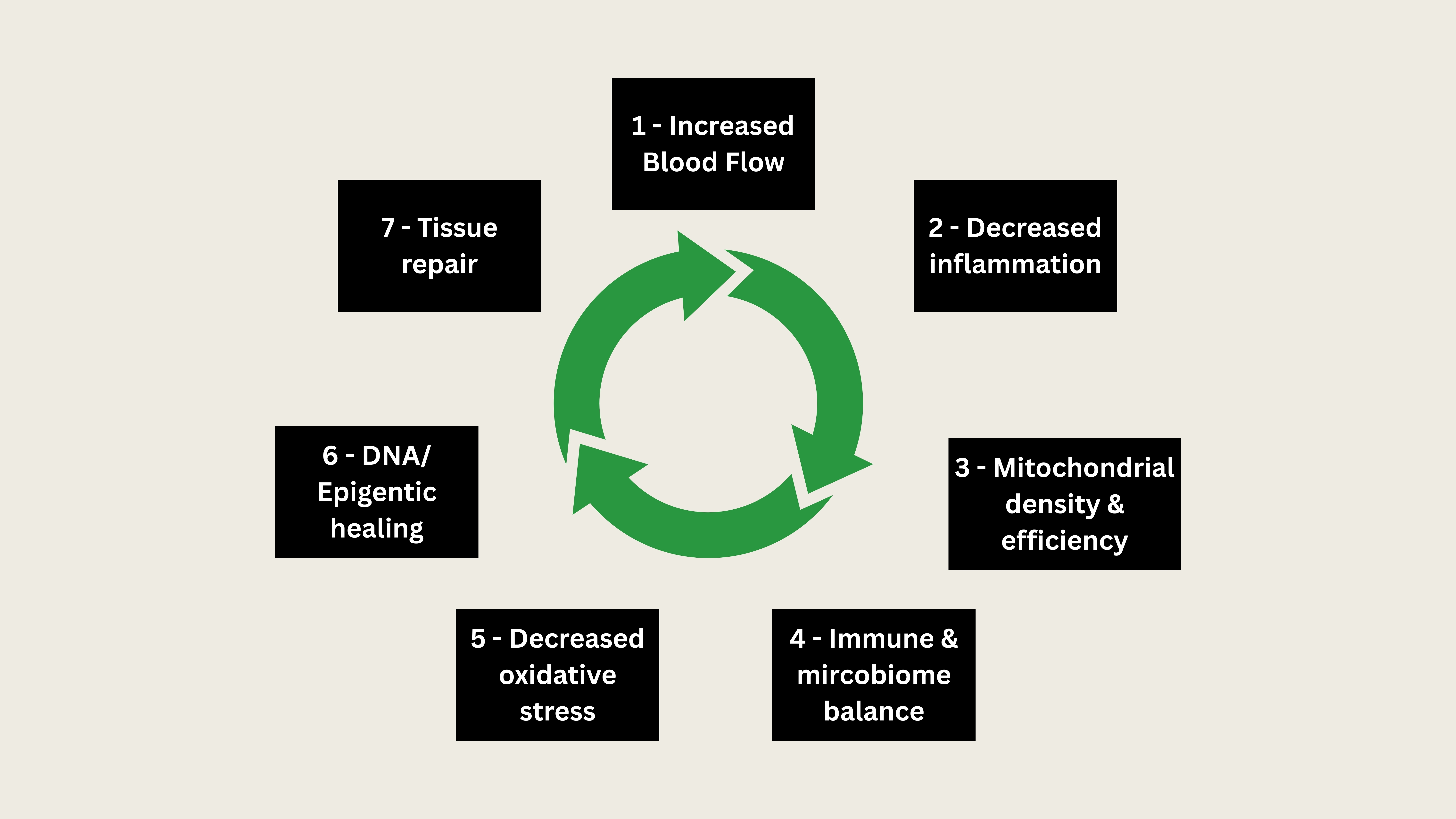
HBOT REVERSES THE CHRONIC ILLNESS CYCLE
Hyperbaric Oxygen Therapy actually reverses the chronic illness cycle initiating self-healing.
HBOT is one of the few therapies that does this because it can meaningfully increase tissue oxygenation and trigger downstream effects that matter in chronic illness patterns.
THE CHRONIC ILLNESS PROGRESSION
Chronic illness follows this degeneration cycle
HBOT REVERSES THE CHRONIC ILLNESS CYCLE
Hyperbaric Oxygen Therapy actually reverses the chronic illness cycle initiating self-healing.
HBOT is one of the few therapies that does this because it can meaningfully increase tissue oxygenation and trigger downstream effects that matter in chronic illness patterns.
Treatment Protocol & What to Expect
Treatment protocols vary depending on the condition. Patients can get relief from some conditions within just a few sessions. More chronic conditions that have been present for some time require more sessions. Session durations are mostly 60mins with some conditions requiring 2 hour treatments.
Typical protocol: 20-40 sessions over 4-8 weeks
Each session lasts 60-120 minutes
Comfortable, spacious chambers with entertainment options
Sessions are relaxing and pain-free
Gradual pressure changes prevent discomfort
Treatment can be customized based on individual needs
HBOT for Cancer Support & Recovery
HBOT is often recommended by GP's and Oncologists due to the benefits of boosting the immune system, accelerated wound healing, inflammation reduction, increased stem cell production, antimicrobial benefits and enhancing natural killer cells.
We regularly get referrals from GP's, Oncologist and Naturopaths to support cancer patients with HBOT either during or after traditional cancer treatments (chemtherapy, radiation therapy).
Accelerates wound healing and tissue repair.
Improves white blood cell function within hours of treatment
Reduces inflammation and swelling in affected areas.
Stimulates the production and mobilization of stem cells, aiding in tissue regeneration.
Boosts antimicrobial activity, helping the body fight bacteria and fungi.
Enhances the activity of natural killer cells, which target infected or abnormal cells.

Treatment Protocol & What to Expect
Typical protocol: 20-40 sessions over 4-8 weeks
Each session lasts 60-120 minutes
Comfortable, spacious chambers with entertainment options
Sessions are relaxing and pain-free
Gradual pressure changes prevent discomfort
Treatment can be customized based on individual needs
HBOT for Cancer Support & Recovery
HBOT is often recommended by GP's and Oncologists due to the benefits of boosting the immune system, accelerated wound healing, inflammation reduction, increased stem cell production, antimicrobial benefits and enhancing natural killer cells.
We regularly get referrals from GP's, Oncologist and Naturopaths to support cancer patients with HBOT either during or after traditional cancer treatments (chemtherapy, radiation therapy).
Accelerates wound healing and tissue repair.
Improves white blood cell function within hours of treatment
Reduces inflammation and swelling in affected areas.
Stimulates the production and mobilization of stem cells, aiding in tissue regeneration.
Boosts antimicrobial activity, helping the body fight bacteria and fungi.
Enhances the activity of natural killer cells, which target infected or abnormal cells.
What others are saying
"Loved everything so far"
“I can say without a doubt the contribution to my wellbeing during an intense health challenge has been nothing short of remarkable. I was experiencing excruciating pain and was extremely debilitated when I showed up to Natasha. Within one session the change was extraordinary. I left with no pain and my eyes instead of sunken in and dark were now bright again."
- Michelle
"My life changed forever"
"For the last year I have struggled with excruciating sciatica pain having to sleep in a chair every night to try find some comfort. Natasha and her team have transformed my life in just 2 months - I am pain free and happily sleeping in my bed again. I can’t thank you enough!"
- July
"Highly recommend this"
"My 9 year old boy was really struggling at school from being bullied as a shy introvert and being neuro diverse struggling with learning. We had to pull him out to school and home school him, as he did not want to socialise with anyone. Natasha’s deep relaxation therapy helped him release his anxiety and bottled up emotions in such a gentle way. The brightness has returned to his eyes, he is happy again and expressing his personality that was suppressed for so long. His confidence has increased massively and he has asked to go back to school! Thank you so much for giving me my boy back."
- Tash
"Incredible Wellness Clinic"
"Shine Health and Wellness is an incredible wellness clinic with so many different wellness modalities. From a traditional hyperbaric chamber, to a world class walk in hyberbaric chamber, sound healing, Red Light therapy, infra-red sauna and vibrational water beds. There is something for everyone! The treatments are non-invasive and leave you feeling relaxed and invigorated at the same time!
We are so blessed to have such an amazing holistic practice on the Sunshine Coast. Wholeheartedly recommend."
- Candice R
What others are saying
"Loved everything so far"
“I can say without a doubt the contribution to my wellbeing during an intense health challenge has been nothing short of remarkable. I was experiencing excruciating pain and was extremely debilitated when I showed up to Natasha. Within one session the change was extraordinary. I left with no pain and my eyes instead of sunken in and dark were now bright again."
- Michelle
"My life changed forever"
"For the last year I have struggled with excruciating sciatica pain having to sleep in a chair every night to try find some comfort. Natasha and her team have transformed my life in just 2 months - I am pain free and happily sleeping in my bed again. I can’t thank you enough!"
- July
"Highly recommend this"
"My 9 year old boy was really struggling at school from being bullied as a shy introvert and being neuro diverse struggling with learning. We had to pull him out to school and home school him, as he did not want to socialise with anyone. Natasha’s deep relaxation therapy helped him release his anxiety and bottled up emotions in such a gentle way. The brightness has returned to his eyes, he is happy again and expressing his personality that was suppressed for so long. His confidence has increased massively and he has asked to go back to school! Thank you so much for giving me my boy back."
- Tash
"Incredible Wellness Clinic"
Shine Health and Wellness is an incredible wellness clinic with so many different wellness modalities. From a traditional hyperbaric chamber, to a world class walk in hyberbaric chamber, sound healing, Red Light therapy, infra-red sauna and vibrational water beds. There is something for everyone! The treatments are non-invasive and leave you feeling relaxed and invigorated at the same time!
We are so blessed to have such an amazing holistic practice on the Sunshine Coast. Wholeheartedly recommend.
- Candice R
How Much does HBOT Cost?
First class hyperbaric pricing
Experience First-Class Luxury HyperBaric Oxygen Therapy in Australia's first walk-in 2.0ATA chamber, complete with mask-free oxygen breather, leather recliner, TV, and adjustable lighting.
JANUARY SPECIAL - FOUNDING MEMBERS ONLY!
$250
($167/hr of treatment)
1 hr session + 20min Trinity Treatment
$650
($144/hr of treatment)
3 Pack of 1hr 20min sessions
$1025
($136/hr of treatment)
5 Pack of 1hr 20min sessions
$1,850
($123/hr of treatment)
10 Pack of 1hr 20min sessions
$3,200
($106/hr of treatment)
20 Pack of 1hr 20min sessions
ECONOMY class hyperbaric pricing
Hardshell 2.0ATA lying down hyperbaric chamber with oxygen mask
$150
($112.50/hr of treatment)
1 hr session + 20min Trinity Treatment
$435
($108.75/hr of treatment)
3 Pack of 1hr 20min sessions
$700
($105.00/hr of treatment)
5 Pack of 1hr 20min sessions
$1300
($97.50/hr of treatment)
10 Pack of 1hr 20min sessions
$2200
($82.50/hr of treatment)
20 Pack of 1hr 20min sessions
How Much does HBOT Cost?
First class hyperbaric pricing
Experience First-Class Luxury HyperBaric Oxygen Therapy in Australia's first walk-in 2.0ATA chamber, complete with mask-free oxygen breather, leather recliner, TV, and adjustable lighting.
JANUARY SPECIAL - FOUNDING MEMBERS ONLY!
$200
($150/hr of treatment)
1 hr session + 20min Trinity Treatment
$570
($142.50/hr of treatment)
3 Pack of 1hr 20min sessions
$925
($138.75/hr of treatment)
5 Pack of 1hr 20min sessions
$1,700
($127.50/hr of treatment)
10 Pack of 1hr 20min sessions
$3,000
($112.50/hr of treatment)
20 Pack of 1hr 20min sessions
ECONOMY class hyperbaric pricing
Hardshell 2.0ATA lying down hyperbaric chamber with oxygen mask
$150
($124.06/hr of treatment)
1 hr session + 20min Trinity Treatment
$435
($97.64/hr of treatment)
3 Pack of 1hr 20min sessions
$700
($75.19/hr of treatment)
5 Pack of 1hr 20min sessions
$1300
($108.75/hr of treatment)
10 Pack of 1hr 20min sessions
$2200
($93.75/hr of treatment)
20 Pack of 1hr 20min sessions
Frequently Asked Questions
How quickly will I see results?
Some benefits appear within days, while others develop over weeks to months.
Can I do HBOT while taking medications?
Most medications are compatible, but always inform us of all medications and supplements.
What are the key benefits of HBOT offered at Shine?
Shine’s 2.0 ATA hyperbaric chamber provides:
• Neovascularization (new blood vessel growth)
• Increased tissue oxygen perfusion
• Enhanced white blood cell function (neutrophils, macrophages)
• Promotion of nerve healing factors (VEGF, BDNF, HIF1)
• Improved wound healing, stem cell mobilization, anti-inflammatory effects
• Mitochondrial repair, anti-microbial support, and edema reduction.
How unique is Shine’s HBOT setup?
We have Australia's only walk-in HBOT 2.0ATA chamber with recliner, TV and mask-free oxygen breather. Ideal for people who feel claustrophobic, have mobility issues and children who can be accompanied by their parent.
What is the “Trinity Treatment” included in the HBOT session?
For HBOT sessions, Shine includes a 20-minute pre-treatment known as the "Trinity Treatment," combining:
• Sound Healing Therapy
• Red Light Therapy
• PEMF (Pulsed Electromagnetic Field) Mat
This is designed to prepare the body for optimal oxygen uptake and enhance overall wellbeing.
Will I feel claustrophobic?
We have the most spacious walk-in HBOT chamber available in Australia. IT feels like you are sitting in a first class aeroplane cabin. Our lie down modern chamber is spacious with large windows. Clear communication with staff is maintained throughout the sessions.
Are there any risks or side effects?
HBOT is generally safe, but potential risks include:
• Barotrauma (ear or lung pressure injury)
• Temporary vision changes (e.g., myopia, cataracts risk with repeated use)
• Oxygen toxicity
• Claustrophobia
• Rare complications (collapsed lung, seizures)
However, our HBOT client questionnaire will uncover any issues or complications in you receiving your HBOT treatment.
Is HBOT safe?
Yes, when administered properly by trained professionals. Side effects are rare and typically minor. Our staff are internationally certified HBOT technicians.
Is there anyone who shouldn't do HBOT?
Very few contraindications exist, mainly untreated pneumothorax and certain lung conditions.
What conditions are HBOT clinically proven to
treat?
Medically accepted uses include:
• Decompression sickness
• Carbon monoxide poisoning
• Non-healing wounds (e.g., diabetic ulcers)
• Radiation tissue injuries
Emerging uses under research and getting good results (not yet medically claimable under insurance):
• Chronic Fatigue - boosts cellular energy and reduces exhaustion
• Cognitive Support - dementia, alzheimer’s, memory, and focus enhancement
• Stroke Recovery & Brain Injuries - improves oxygen flow to damaged brain tissue
• Cancer Support - supports immune system and cellular repair alongside treatment
• Anti-Aging & Skin Health - promotes collagen production & skin rejuvenation
• Autism Spectrum Support - may improve focus, behavior & social interaction
• Sports Performance & Recovery - faster healing from injuries, reduced inflammation, improved endurance
• Immune System Boost - strengthens the body’s defenses against illness
• Alzheimers, Dementia & Post Stroke - Supports neuroplasticity, contributing to brain health and cognitive functioN
• Lyme Disease & Autoimmune - Enhances the activity of natural killer cells, which target infected or abnormal cells.
• IBD, Ulcerative colitis - Reducing inflammation and Boosts antimicrobial activity, helping the body fight bacteria and fungi.
• Rheumatoid Arthritus - Reduces inflammation, increases stem cell production for regeneration
Frequently Asked Questions
How quickly will I see results?
Some benefits appear within days, while others develop over weeks to months.
Can I do HBOT while taking medications?
Most medications are compatible, but always inform us of all medications and supplements.
What are the key benefits of HBOT offered at Shine?
Shine’s 2.0 ATA hyperbaric chamber provides:
• Neovascularization (new blood vessel growth)
• Increased tissue oxygen perfusion
• Enhanced white blood cell function (neutrophils, macrophages)
• Promotion of nerve healing factors (VEGF, BDNF, HIF1)
• Improved wound healing, stem cell mobilization, anti-inflammatory effects
• Mitochondrial repair, anti-microbial support, and edema reduction.
How unique is Shine’s HBOT setup?
We Australia's only walk-in HBOT 2.0ATA chamber with recliner, TV and mask-free oxygen breather. Ideal for people who feel claustrophobic, have mobility issues and children who can be accompanied by their parent.
What is the “Trinity Treatment” included in the HBOT session?
For HBOT sessions, Shine includes a 20-minute pre-treatment known as the "Trinity Treatment," combining:
• Sound Healing Therapy
• Red Light Therapy
• PEMF (Pulsed Electromagnetic Field) Mat
This is designed to prepare the body for optimal oxygen uptake and enhance overall wellbeing.
Will I feel claustrophobic?
We have the most spacious walk-in HBOT chamber available in Australia. IT feels like you are sitting in a first class aeroplane cabin. Our lie down modern chamber is spacious with large windows. Clear communication with staff is maintained throughout the sessions.
Are there any risks or side effects?
HBOT is generally safe, but potential risks include:
• Barotrauma (ear or lung pressure injury)
• Temporary vision changes (e.g., myopia, cataracts risk with repeated use)
• Oxygen toxicity
• Claustrophobia
• Rare complications (collapsed lung, seizures)
However, our HBOT client questionnaire will uncover any issues or complications in you receiving your HBOT treatment.
Is HBOT safe?
Yes, when administered properly by trained professionals. Side effects are rare and typically minor. Our staff are internationally certified HBOT technicians.
Is there anyone who shouldn't do HBOT?
Very few contraindications exist, mainly untreated pneumothorax and certain lung conditions.
What conditions are HBOT clinically proven to
treat?
Medically accepted uses include:
• Decompression sickness
• Carbon monoxide poisoning
• Non-healing wounds (e.g., diabetic ulcers)
• Radiation tissue injuries
Emerging uses under research and getting good results (not yet medically claimable under insurance):
• Chronic Fatigue - boosts cellular energy and reduces exhaustion
• Cognitive Support - dementia, alzheimer’s, memory, and focus enhancement
• Stroke Recovery & Brain Injuries - improves oxygen flow to damaged brain tissue
• Cancer Support - supports immune system and cellular repair alongside treatment
• Anti-Aging & Skin Health - promotes collagen production & skin rejuvenation
• Autism Spectrum Support - may improve focus, behavior & social interaction
• Sports Performance & Recovery - faster healing from injuries, reduced inflammation, improved endurance
• Immune System Boost - strengthens the body’s defenses against illness
• Alzheimers, Dementia & Post Stroke - Supports neuroplasticity, contributing to brain health and cognitive functioN
• Lyme Disease & Autoimmune - Enhances the activity of natural killer cells, which target infected or abnormal cells.
• IBD, Ulcerative colitis - Reducing inflammation and Boosts antimicrobial activity, helping the body fight bacteria and fungi.
• Rheumatoid Arthritus - Reduces inflammation, increases stem cell production for regeneration